Sidetes lata (Ruedemann, 1916)
1. 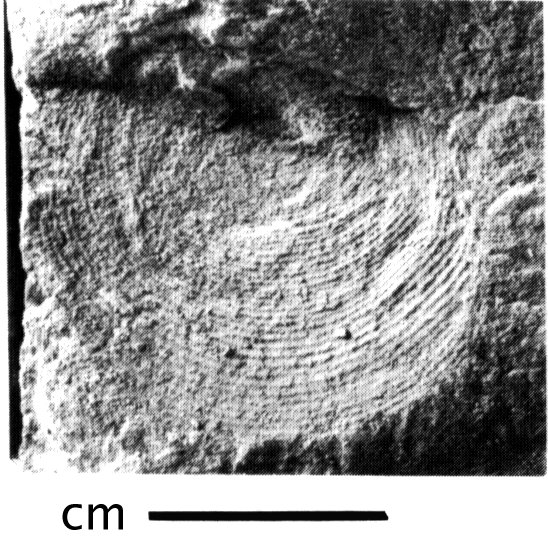 2.
2. 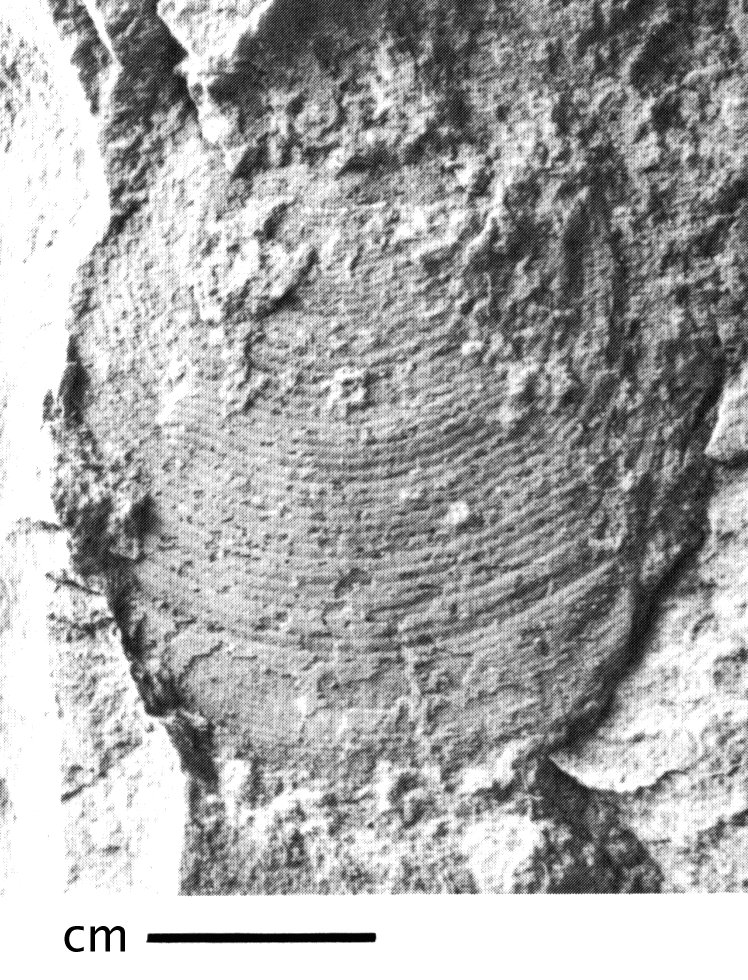 3.
3. 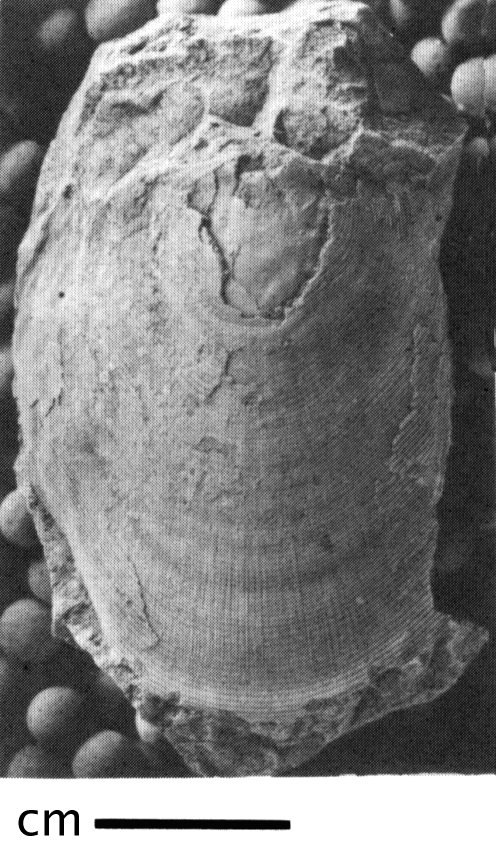 4.
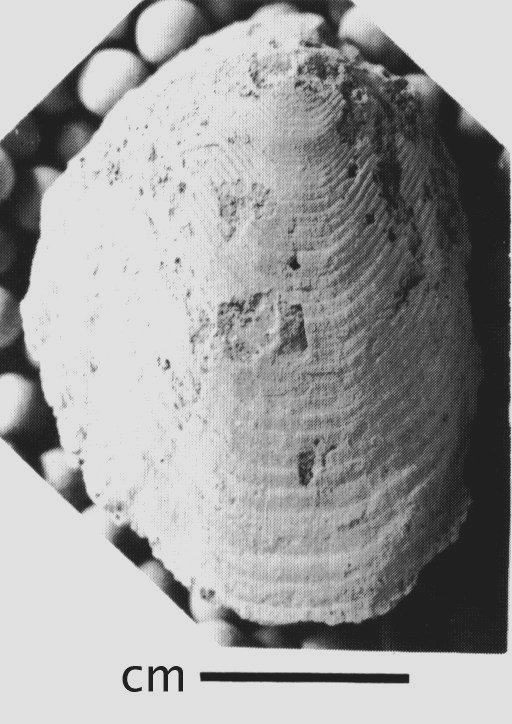
4. 
5. 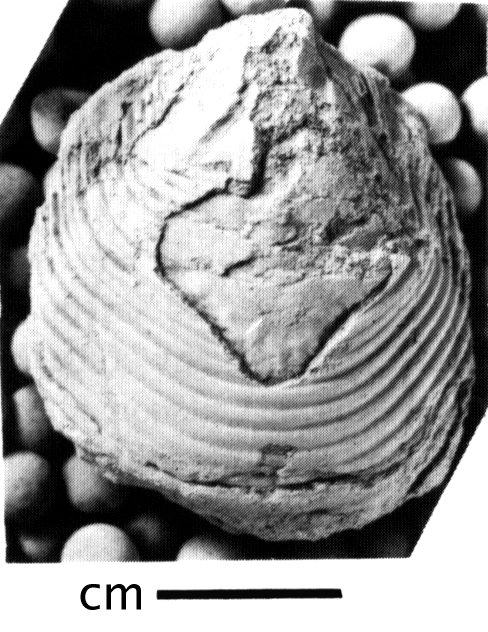 6.
6. 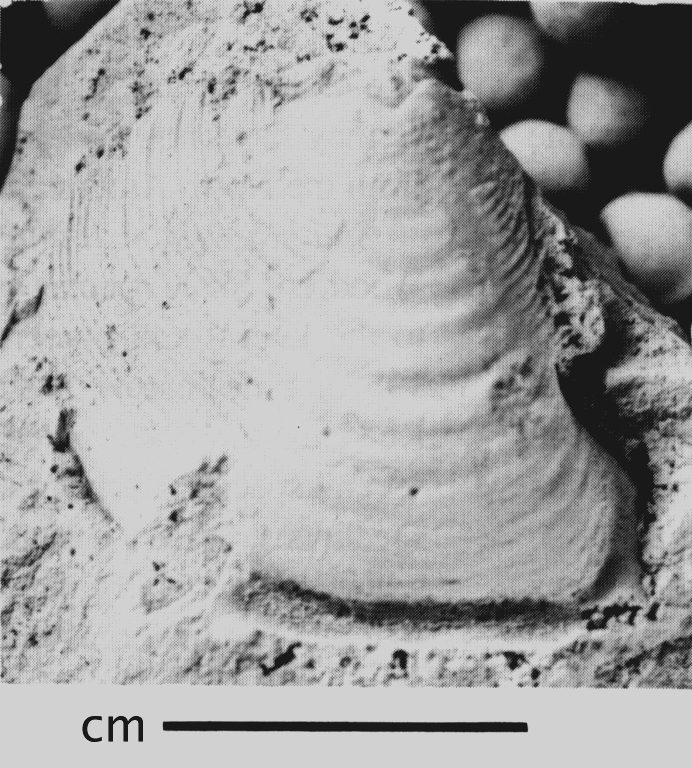 7.
7. 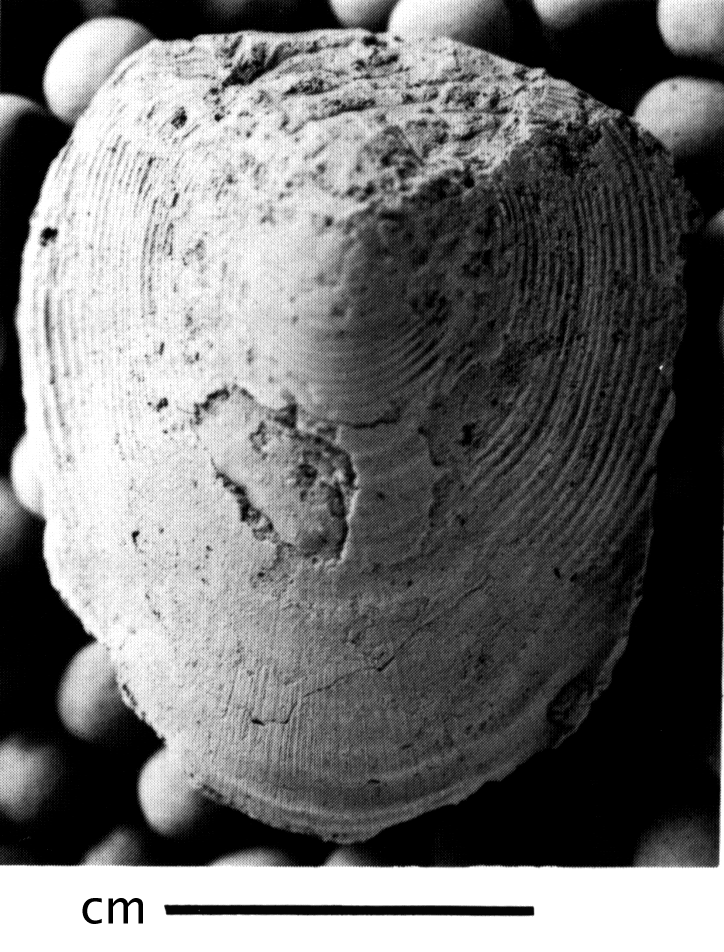
Figure 6 Sidetes lata (Ruedemann, 1916). 1. CMNH 8307a, from Big Creek at Brookside Park, Cleveland. 2. CMNH 8313a, also from Big Creek. 3. USNM 112038, syntype of Spathiocaris striatula Cooper, 1932. 4. USNM 112032 S. striatula syntype. 5. USNM 112028. 6. USNM 112029. 7. USNM 112041. Scale is one centimeter. Click on thumbnails for enlargements.
?Cardiocaris lata WOODWARD, 1882
Spathiocaris lata RUEDEMANN, 1916, p. 94.
Spathiocaris striatula COOPER, 1932, p. 351.
Diagnosis.--Structure semielliptical, length about equal to greatest width, which is near anterior margin. Anterior margin broadly concave. Ornamentation fine, concentric with posterolateral margin.
Description.--Fossil semielliptical, posterolateral margin nearly circular or slightly flattened posteriorly. Greatest width, near anterior margin, approximately equal to length. Anterior angle broadly concave. Ornamentation fine, about 24/cm, concentric with posterolateral margin, bending toward median at anterior margin. Some specimens show superimposed, concentric undulations which are flatter and not as pronounced as those seen in S. ulrichi. S. lutheri is distinctly different in outline from S. lata, while the other taxa are either decidedly narrower or significantly broader.
Type.--Ruedemann's holotype was collected in 1895 from the "Chemung beds" near Avoca, Steuben Co., New York. It is now in the New York State Museum, NYSM 9860.
Material.--Specimens studied which can be assigned to this species include CMNH 8307a and CMNH 8313a from Big Creek at Brookside Park. Woodford Shale specimens which can be assigned to this species are the type specimens of S. striatula, USNM 112038 and 112032, and three specimens formerly identified as S. williamsi, USNM 112037, 112029, and 112041.
Remarks.--Ruedemann described short carbonaceous lines radiating from a semicircular area at the anterior angle. These may be artifacts of preservation, as they have not appeared in any other specimen described from the North American Paleozoic.