Sidetes ulrichi (Cooper, 1932).
1.  2.
2.  3.
3. 
4.  5.
5. 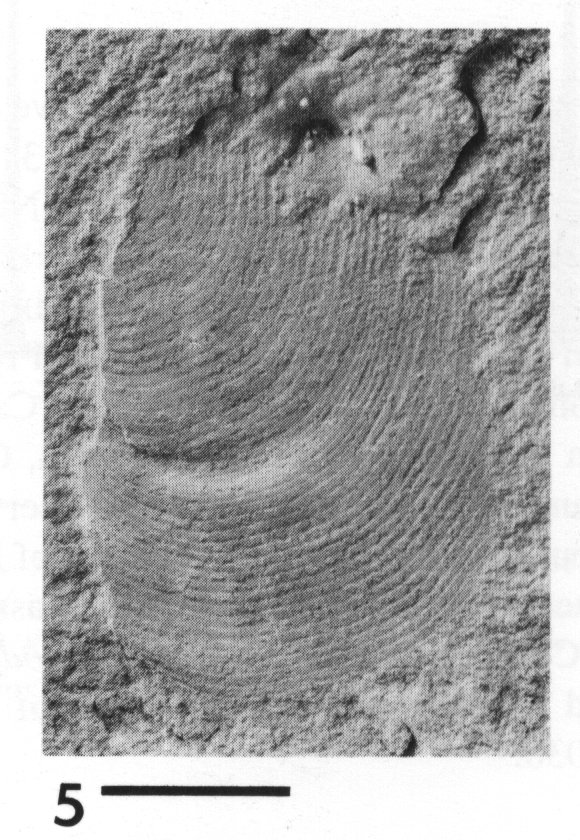
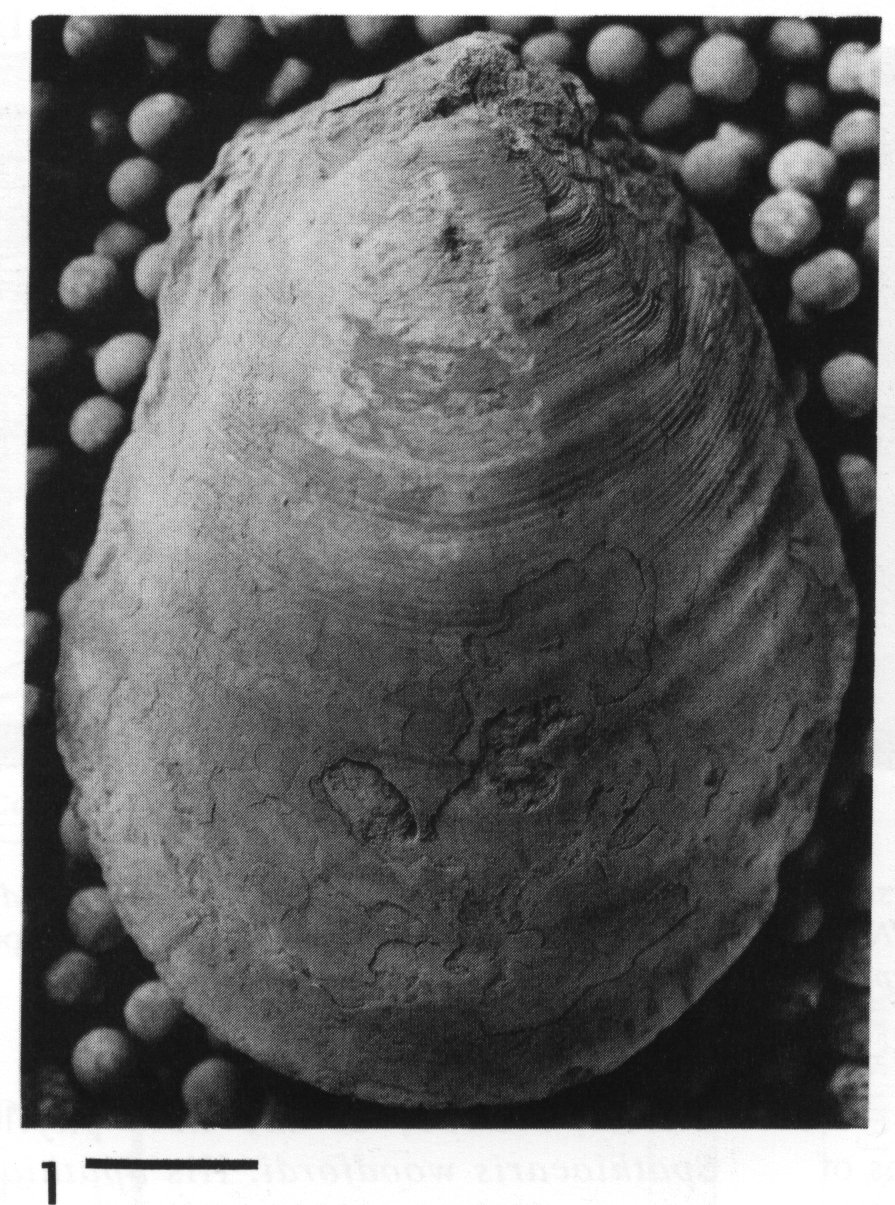
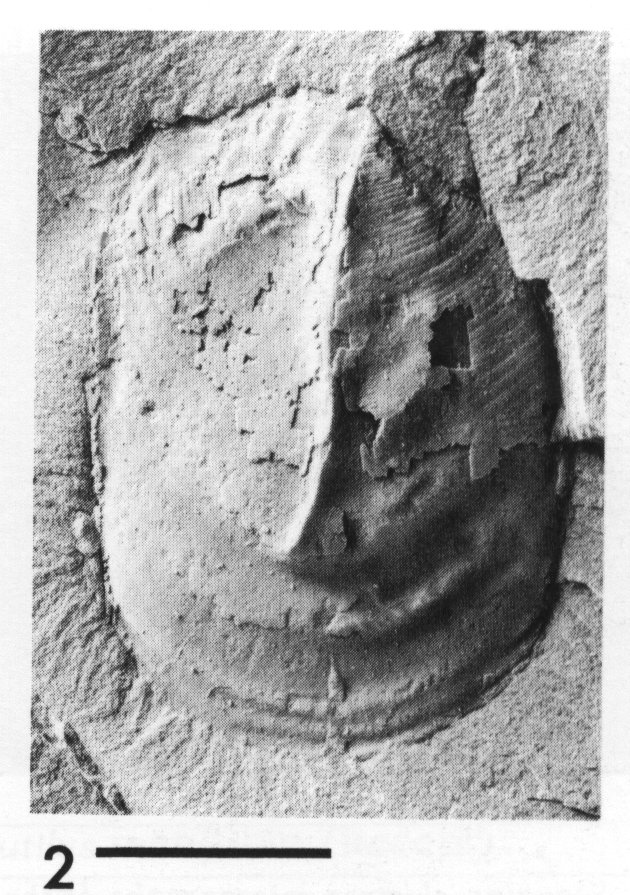
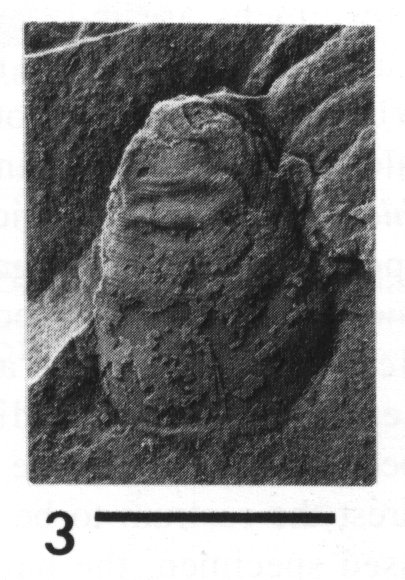
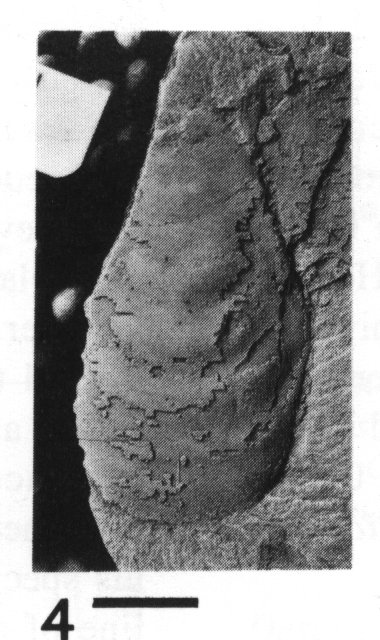
Figure 10 Sidetes ulrichi (Cooper, 1932). 1. USNM 112036, the holotype. 2. CMNH 3744, from Chance Creek. 3. CMNH 8305b, from Big Creek. 4. CMNH 8328a. 5. CMNH 8328b. Scale is one centimeter. Click on thumbnails for enlargements.
Spathiocaris ulrichi COOPER, 1932, p. 352.
Diagnosis.--Structure sub-elliptical, narrower at rostrum. Anterior margin acutely convex. Broadly convex, highest point posterior of rostrum. Superimposed upon fine, concentric ornamentation are broad undulations parallel to ornamentation.
Description.--Outline nearly elliptical, narrower at rostrum, length 10 to 60mm, width about two-thirds of length. Surface corrugated in broad concentric undulations subparallel with posterior margin and intersecting lateral margins, spaced about 3mm apart in a 30mm specimen. Ornamentation similarly oriented, much more finely spaced, 30-60/cm. S. ulrichi is the single species examined which bears a convex anterior margin. All others have straight or indented margins anteriorly.
Type.--Cooper's holotype of Spathiocaris ulrichi was loaned to him by Dr. George H. Girty of the U. S. Geological Survey. It was collected by E. O. Ulrich from the Woodford Formation (Late Devonian) near Dougherty, Oklahoma. It is now at the National Museum, USNM 112036. The type is 60mm long and 44mm wide, somewhat larger than those from the Ohio Shale.
Material.--Specimens studied include the holotype, CMNH 8303 and CMNH 8305b, from Big Creek; CMNH 3744 from Chance Creek; and CMNH 8328a and CMNH 8328c, from an unknown locality. All the Ohio specimens are from the Cleveland Shale.
Remarks.--The dimensions of the specimens studied range from a width-to-length ratio of 0.6 to 0.8; all but the most compacted and flattened exhibit the corrugations superimposed upon the finer concentric ridges. The flattest are assigned to this species primarily on outline and fineness of ornamentation.